Which device management suits you?
With Microsoft Intune and Configuration Manager (CM/SCCM) at the forefront, two distinct paths are offered:
- Intune paves the way for cloud-based flexibility and mobility.
- Configuration Manager continues to serve the need for traditional, in-depth onsite control.”
Understanding the differences
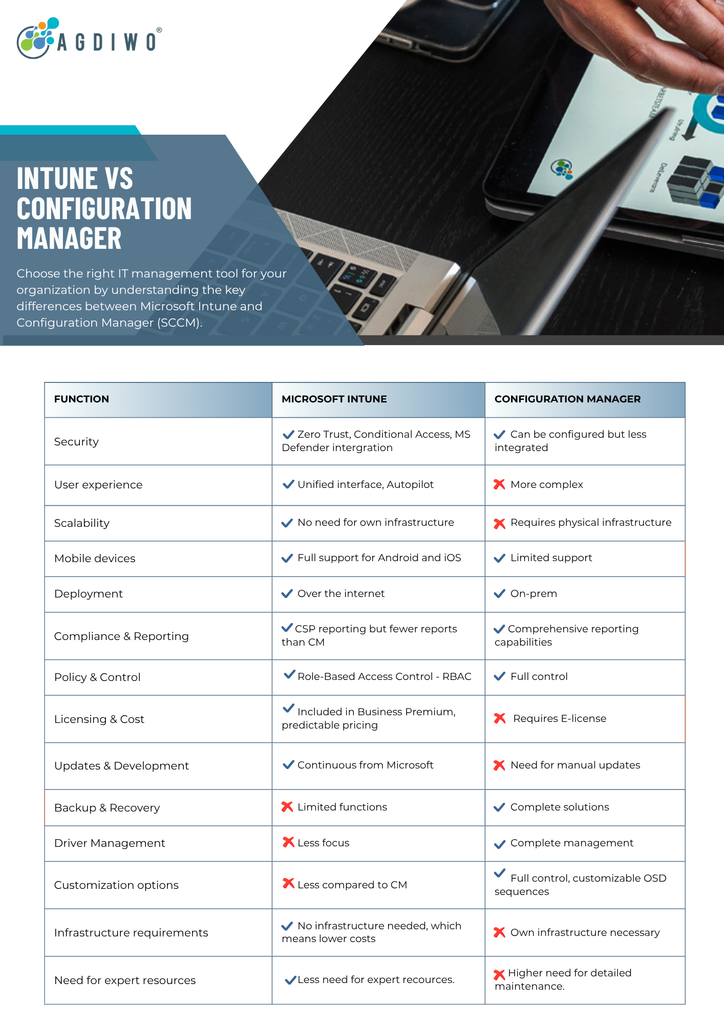
Before we delve deeper into why a transition might be beneficial, let’s first take a look at a direct comparison between Intune and Configuration Manager:
Understanding Microsoft Intune:
Microsoft Intune is a cloud-based device management service tailored for mobile and PC devices, eliminating the need for in-house infrastructure. It facilitates global scaling and simplifies security management through integration with Microsoft Defender and support for Zero Trust principles. Its user-friendly interface and “set and forget” policies reduce daily maintenance requirements. Moreover, Intune is cost-effective and seamlessly integrated with other Microsoft services.
Understanding Configuration Manager/SCCM:
Configuration Manager, or SCCM, offers a traditional solution with comprehensive control over PC devices and networks, requiring its own infrastructure. It is ideal for businesses with extensive IT environments, providing in-depth security controls and advanced features such as OS deployment. However, CM is resource-intensive with higher initial costs and requires continuous monitoring.
Co-management: What does it mean?
Co-management is particularly valuable for organizations in the transition phase from traditional on-premises IT to a more modern, cloud-based environment. It also allows organizations with a mixed environment of older and modern devices to efficiently manage their resources.
- Flexibility: Organizations can take advantage of the scalability and flexibility of the cloud while retaining control over critical functions that require the detailed management Configuration Manager provides.
- Gradual transition to the cloud: Co-management offers organizations the opportunity to move to cloud-based management on their own terms, enabling a smooth transition without disrupting existing processes.
Co-management is especially beneficial for organizations transitioning from traditional on-premises IT to a more modern, cloud-based setting. It also enables organizations with a mixed environment of older and modern devices to effectively manage their resources.
Why now is the right time to transition to Intune:
- Adaptation to mobility and remote work: Intune facilitates the management and security of devices everywhere, reflecting the need for the ability to work remotely and flexibly.
- Simplified IT management: With Intune, the complexity and need for daily management are reduced, thanks to cloud-based “set and forget” policies.
- Strategic alignment: The transition to Intune represents an alignment with modern security principles such as Zero Trust, which is crucial in today’s cyber threat landscape.

Final thoughts:
Choosing between Intune and Configuration Manager or integrating them through Co-Management depends on your unique business needs and strategic goals.
While Intune is the prime choice for modern enterprises seeking scalability, security, and user-friendliness, a combined solution may be the optimal path for those still navigating their digital transformation journey. Moving from Configuration Manager to Intune is more than a technical shift; it’s a strategic decision that could be pivotal for the future of your IT environment.
.
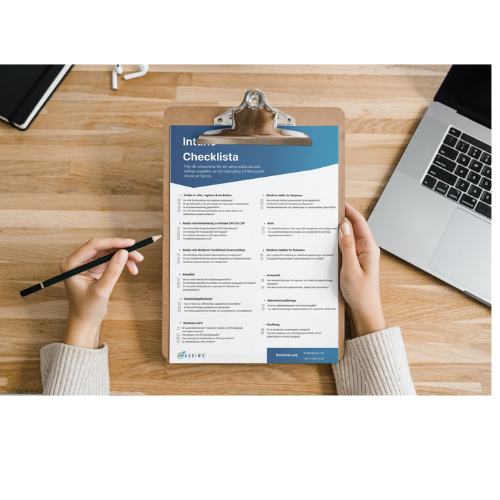
Need help with the transition to Intune?
Check out our Intune readiness checklist and see if you are ready for Intune.